Why Florida’s Hurricane Season Hits Livestock Owners Hardest
Most homeowners worry about their roof. Livestock owners worry about the roof, the fence line, the feed barn, the access road, the well pump, and a herd that does not understand what 130 mph winds are. Florida sees more direct and grazing hurricane strikes than any other state, and the same flat, low-lying ground that makes our pastures so productive turns into a problem the moment heavy rain stalls over your property.
Ocala and the surrounding horse country sit far enough inland to avoid the worst storm surge, but tropical systems still drop 8 to 15 inches of rain, knock out power for days at a time, and tear down miles of fencing in a single afternoon. Anyone running an equine operation, a cattle herd, or a few backyard goats needs a plan that covers both the storm itself and the rough two-week stretch that often follows.
Build Your Farm’s Hurricane Plan Before June 1
Hurricane prep is not a 48-hour project. The owners who come out of storm season with their animals intact almost always started months earlier. If you have not yet, June 1 is the deadline to have the following pieces in place.
Get Health Records and Coggins Up to Date
Any boarding facility, fairground, or evacuation site that takes in your horse will want to see a current negative Coggins and core vaccinations: Eastern and Western Equine Encephalitis, West Nile, tetanus, and rabies. Without those papers, you may be turned away at the gate when you need shelter most. Cattle and small ruminant owners should keep vaccination logs and any required disease testing records together in a waterproof folder you can grab in under a minute.
Stock 7 to 14 Days of Feed, Hay, and Water
UF/IFAS Extension recommends at least one to two weeks of feed, hay, and clean water on hand before a storm forms. A 1,000 pound horse drinks 12 to 20 gallons of water per day. A herd of ten quickly burns through whatever you have in the trough once power goes out and the well stops pumping. Store hay off the ground, ideally in a separate barn from your primary shelter, and keep at least one large potable water container filled and ready.
Walk Your Fences and Identify a Safer Paddock
External fencing is almost always damaged in a major storm. Rather than fighting that, identify or build an interior paddock on the highest ground you have, close to the hay barn, with access to drinking water. Reinforce it now, while the weather is calm. Keep fence wire, T-posts, gate latches, and basic tools staged in one waterproof bin so you can do quick repairs the morning after.
Tag Every Animal
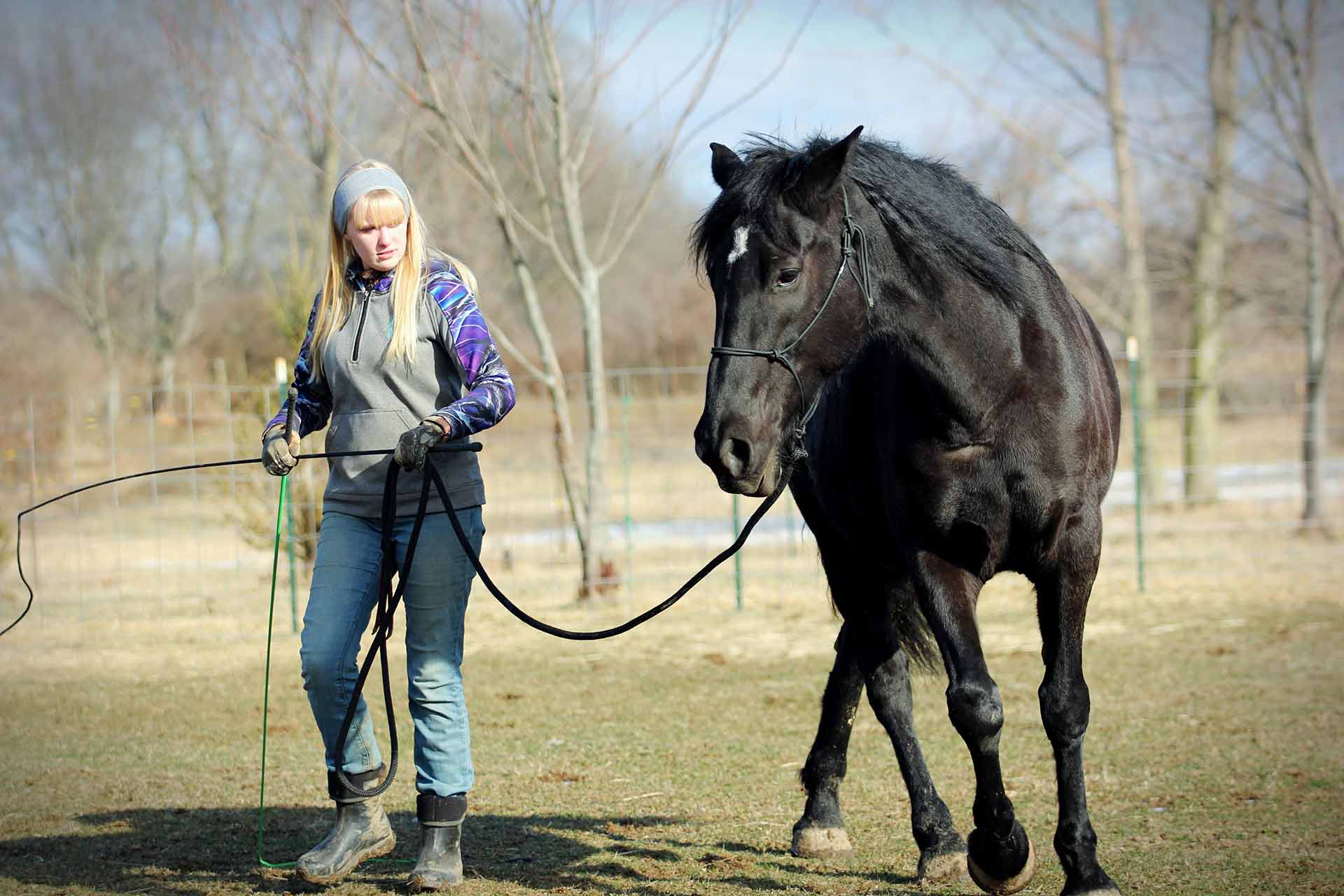
Horses can be identified with luggage tags braided into the mane, livestock crayon markings on the hide, or laminated ID cards zip-tied to a halter. Cattle, sheep, and goats should carry ear tags with your phone number and farm name. Microchips are great long-term insurance, but visible ID is what gets a loose horse home in the chaos after the storm.
Sheltering: Barn or Pasture?
This is the question that splits livestock owners every season, and the honest answer is: it depends on your property.
A well-built modern barn on high ground, with hurricane-rated construction and no large trees overhead, can be the safest place. An older pole barn surrounded by pines or near power lines becomes a deathtrap when winds exceed 75 mph.
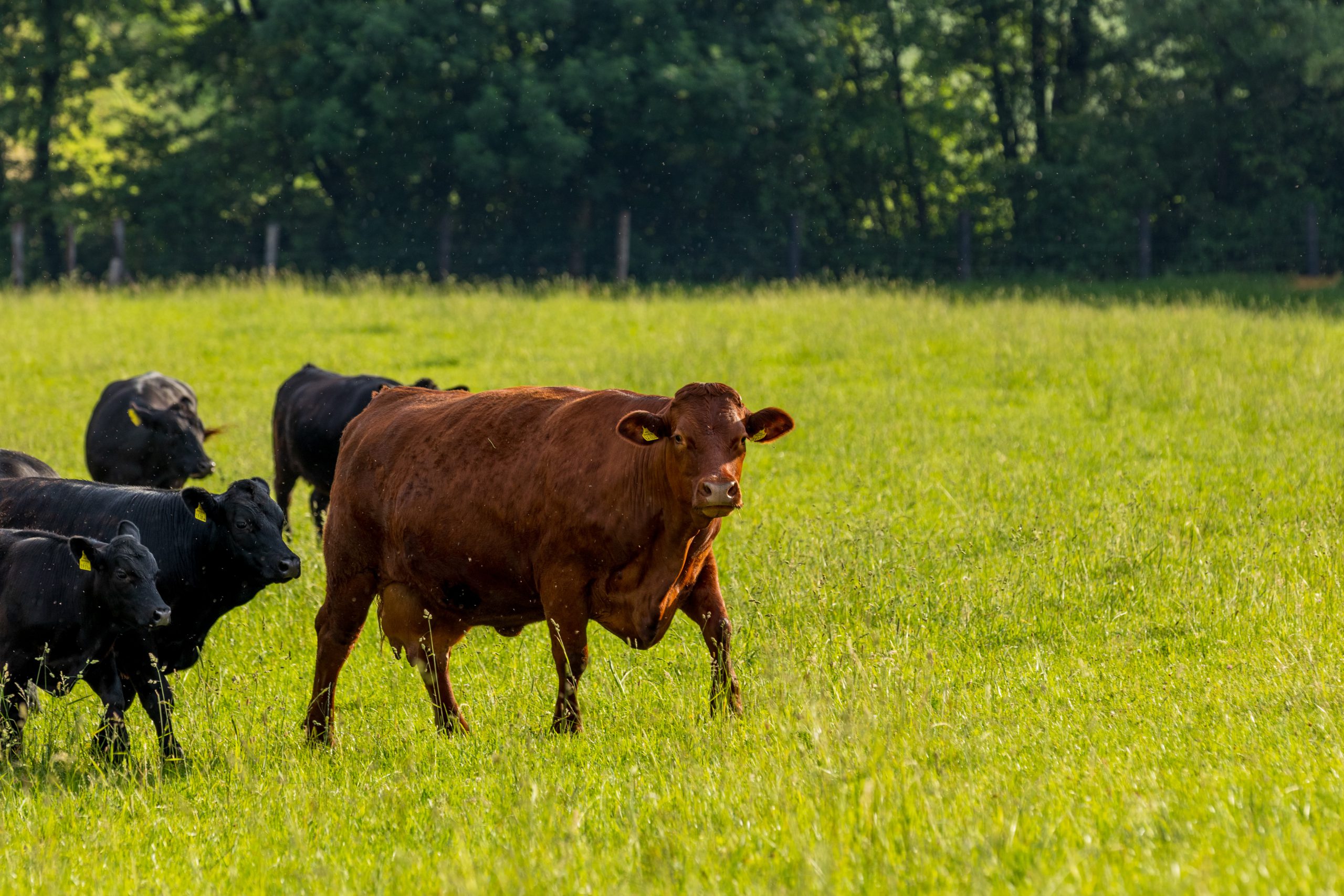
For most Florida farms, large pasture turnout in a hurricane-rated interior paddock is the safer call. Horses and cattle are remarkably good at moving away from flying debris and finding low ground when they need to. Inside a collapsing barn, they have nowhere to go. The exception is flood-prone properties, where pastures hold standing water for days and animals can drown if turned out. If you keep your animals in the barn, open the stall doors so they can move on their own if the roof starts to fail.
The 72 Hour Window: Final Pre-Storm Checks
Once the National Hurricane Center puts your county inside the five-day cone, treat it like the storm is coming. By the 48 hour mark, you should have completed the following:
Filled every water trough, stock tank, and clean container on the property. Power and well pump access can disappear for a week.
Topped off generator and tractor fuel. Stations run out within hours of a watch posting.
Moved hay to the driest, most elevated storage you have. Wet hay rots within 48 hours and can spontaneously combust as it decomposes.
Photographed every animal, every structure, and every piece of equipment for insurance purposes.
Updated your contact list with your veterinarian, the local Farm Service Agency office, your hauler, and at least two backup evacuation sites.
If you plan to evacuate horses or trailer cattle out, do it 48 hours before tropical storm force winds arrive. Hauling a trailer in gusts above 40 mph is dangerous and most highways close before landfall anyway.
After the Storm: Counting Losses and What Comes Next
The first 24 hours after a hurricane passes are about safety. Walk your property carefully, watching for downed power lines, displaced fencing, snakes pushed up by flood water, and debris that animals can step on. Account for every animal before you start any cleanup.
Take photos of everything before you move it. The Farm Service Agency requires loss documentation within 72 hours for many disaster assistance programs. Save every receipt for fuel, repairs, supplies, and contractor services.
If you have lost an animal, you have a small window before heat and humidity make the situation urgent. In Florida, decomposition advances fast, and on-site burial is not legal in much of the state without specific permits and conditions met. Our team handles equine and livestock removal across Central Florida, and we can usually be dispatched within hours. For background on the rules and your options, our guide on what to do when a horse dies in Florida covers the full process. Cattle and large livestock owners should review our cattle removal services page for what to expect.
When You Need to Call VPF
We have worked through every named storm to cross the Florida peninsula in the last decade. After Hurricane Ian, after Idalia, after Helene, our crews were on the road the moment the wind dropped below tropical storm strength. If you need equine or livestock disposal services in the aftermath of a hurricane, or want to talk through a plan now while the season is still quiet, contact us here or call (352) 454-6300 any hour of any day.
Frequently Asked Questions
When does Florida’s hurricane season officially start?
The Atlantic hurricane season runs June 1 through November 30, with peak activity from mid-August through mid-October. Florida has been hit by named storms as early as May and as late as December, so an off-season storm is not out of the question.
How much feed and water should I store for my livestock before a hurricane?
UF/IFAS recommends a minimum of 7 to 14 days of feed, hay, and supplements, plus 12 to 20 gallons of fresh water per horse per day. Cattle need roughly the same per head depending on size and lactation status. Store everything off the ground in waterproof containers if possible.
Should I evacuate my horses or shelter in place?
That depends on your property’s elevation, the strength of your barn, your access to a confirmed evacuation site, and the storm’s track. Evacuation has to happen 48 hours before tropical storm winds arrive, otherwise you are putting your animals at greater risk on the road than at home. Pick your plan early and have at least two backup locations confirmed in writing.
Can I bury a horse or cow on my own property in Florida after a storm?
On-site burial is restricted under Florida law and varies by county. You generally need a minimum distance from water sources, a minimum depth, and a property of sufficient size. Disposal restrictions tighten further after declared emergencies. Our on-site horse burial page covers the rules in more detail, and our team can help you understand what is legal on your specific parcel.
What happens if I lose multiple animals in a single storm?
Call us immediately. Heat and humidity in Florida make multi-animal loss situations urgent within hours, and the longer cleanup is delayed, the harder it becomes on the rest of your herd, your neighbors, and the property itself. We respond around the clock and can scale our crews and equipment for any size loss.
Does insurance cover livestock losses from hurricanes?
Many farm and ranch policies include livestock mortality riders, and the USDA Livestock Indemnity Program covers losses above normal mortality rates from a qualifying disaster. Document everything with photographs and receipts, and report losses to your insurer and the local Farm Service Agency office within 72 hours.
Photo Gallery